The History Behind Albanian Byrek
From Ottoman kitchens to the corner byrektore: how a layered pastry became part of everyday Albanian life.
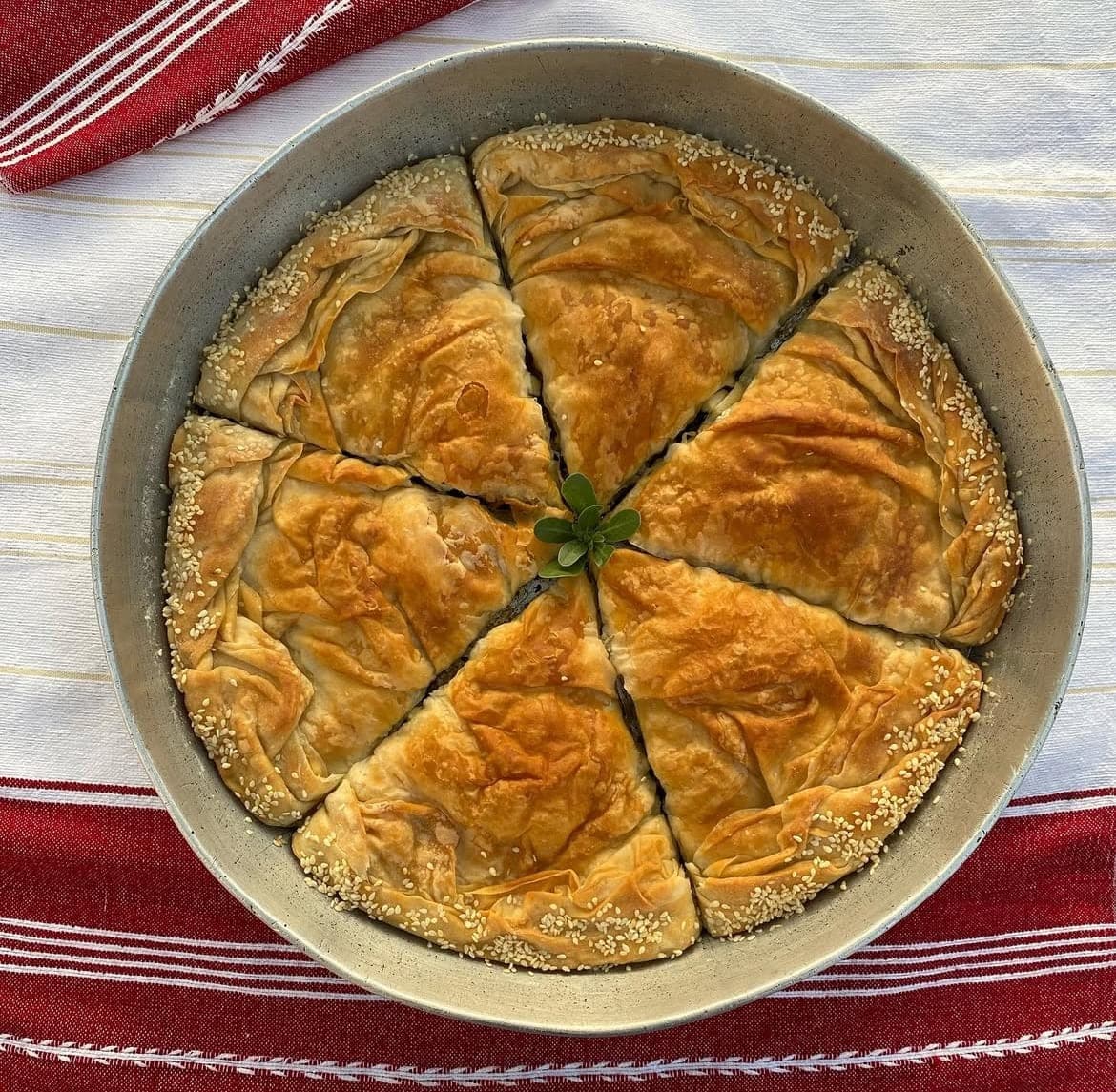
Ask Albanians which dish reminds them most of home and many will say byrek. It's breakfast on the way to school, a snack from the corner bakery, and the centerpiece of Sunday lunch at grandmother's. But byrek also belongs to a much bigger story — one that stretches across the Balkans and the eastern Mediterranean.
A shared pastry tradition
The word byrek is closely related to the Turkish börek, and layered and filled pastries spread widely through the regions of the Ottoman Empire, including the Balkans, where Albania was part of the empire for more than four centuries. That's why you'll find relatives of byrek across the region — burek in Bosnia and Serbia, pita in many Balkan kitchens, and börek in Turkey.
Each place made the idea its own. Albanian byrek is typically baked in a large round tray (tepsi), cut into wedges, and made with sheets of pastry called petë.
The art of petë
Traditionally, petë is made from just flour, water and salt, rolled out by hand into sheets so thin you can almost read through them. Experienced cooks use a long, thin wooden rolling pin (called an okllai in many parts of Albania) and roll several sheets at once, brushed with oil or butter in between.
It's a skill passed down in families, and a byrek made with homemade petë has a chewier, more rustic texture than one made with store-bought filo. Both are delicious — our home recipe uses filo so you can make it any day of the week.
The byrektore
In Albanian towns, byrek has its own kind of shop: the byrektore. They open early and sell byrek by weight or by the piece, usually alongside dhallë (a salty yogurt drink) or kos (yogurt). For many Albanians, a warm piece of byrek wrapped in paper is the taste of an ordinary morning.
Fillings through the seasons
- Spinach and cheese (me spinaq e djathë) — the everyday classic.
- Cheese only (me djathë) — often with gjizë, the fresh whey cheese.
- Minced meat and onion (me mish).
- Leeks (me presh) — especially in winter.
- Pumpkin (me kungull) — sweet or savory, in autumn.
- Wild greens and nettles (me hithra) — in spring.
Some families also make a sweet milk and semolina byrek, and cornmeal-based pies like pispili belong to the same family of savory bakes.
Byrek today
Byrek has travelled with the Albanian diaspora to Italy, Greece, the UK and North America, and it remains a symbol of hospitality: when guests arrive, a tray of byrek is often already in the oven. If you want to taste Albania at home, it's the best place to begin — and once you're hooked, try tavë kosi and fërgesë next.